How It Works
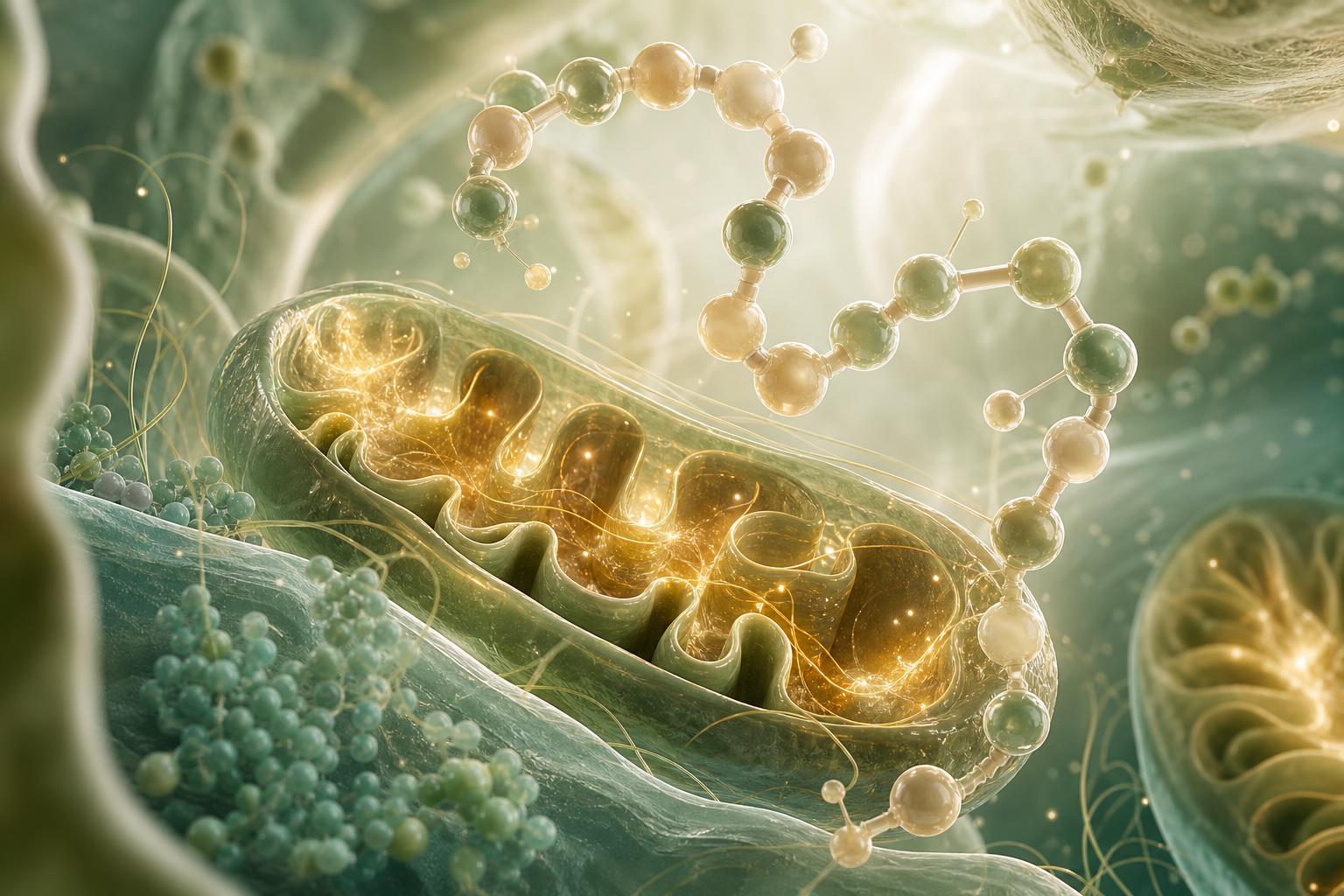
Humanin is a small peptide encoded within mitochondrial DNA that cells appear to release under stress as a kind of survival signal. In everyday terms, it is studied for helping cells resist the pressures of oxidative and metabolic stress and resist premature self-destruction (apoptosis). Research also notes that natural humanin levels tend to decline with age, which has drawn interest in its role in healthy aging. In practice, it is explored as one part of a personalized longevity and cellular-vitality protocol that Dr. Rob designs and monitors for each individual.
The Science & Mechanism
Humanin is a 24-amino-acid peptide encoded by a short open reading frame within the 16S rRNA region of mitochondrial DNA, making it one of the first characterized mitochondrial-derived peptides. It was originally identified in 2001 from neurons that survived in Alzheimer's-affected brain tissue, prompting interest in its cytoprotective and neuroprotective signaling. Secreted humanin engages a tripartite cell-surface receptor complex composed of gp130, WSX-1 (IL-27 receptor), and CNTF receptor, and also interacts with formyl peptide receptor 2 (FPR2). Downstream, this signaling is associated with activation of the AKT, ERK1/2, and STAT3 pathways that support cell survival. Intracellularly, humanin is described as binding the pro-apoptotic protein BAX to limit mitochondrial membrane permeabilization, and it interacts with IGFBP-3 to modulate IGF-1 signaling. Circulating levels tend to decline with age, are reported to be higher in offspring of centenarians, and remain elevated in long-lived species. In model organisms such as C. elegans, humanin has been studied for extending lifespan in a manner dependent on the daf-16/FOXO pathway.
Potential Benefits
- May support cellular resilience against oxidative and metabolic stress
- Studied for its anti-apoptotic, cytoprotective role in stressed cells
- Is being studied for neuroprotective signaling and cognitive aging
- May help modulate IGF-1 and metabolic signaling pathways
- Studied for its association with healthy aging and longevity
- May support mitochondrial stress-adaptation and cell survival signaling
Who It May Be Best Suited For
- Adults pursuing longevity and cellular-resilience strategies
- Those interested in mitochondrial and stress-adaptation support
- Individuals focused on healthy cognitive and cardiovascular aging
- Patients seeking a physician-guided, individualized protocol
Important Considerations
Humanin is offered exclusively as educational content within a physician-guided practice, and much of the human-relevant evidence is early or preclinical, so it is best understood as an area of active study rather than a proven therapy. Whether it is appropriate, and how it might fit alongside lifestyle, nutrition, and other protocols, is determined one-on-one with Dr. Rob based on your labs, history, and goals. These statements have not been evaluated by the FDA, this is not intended to diagnose, treat, cure, or prevent any disease, and individual results vary.