
How It Works
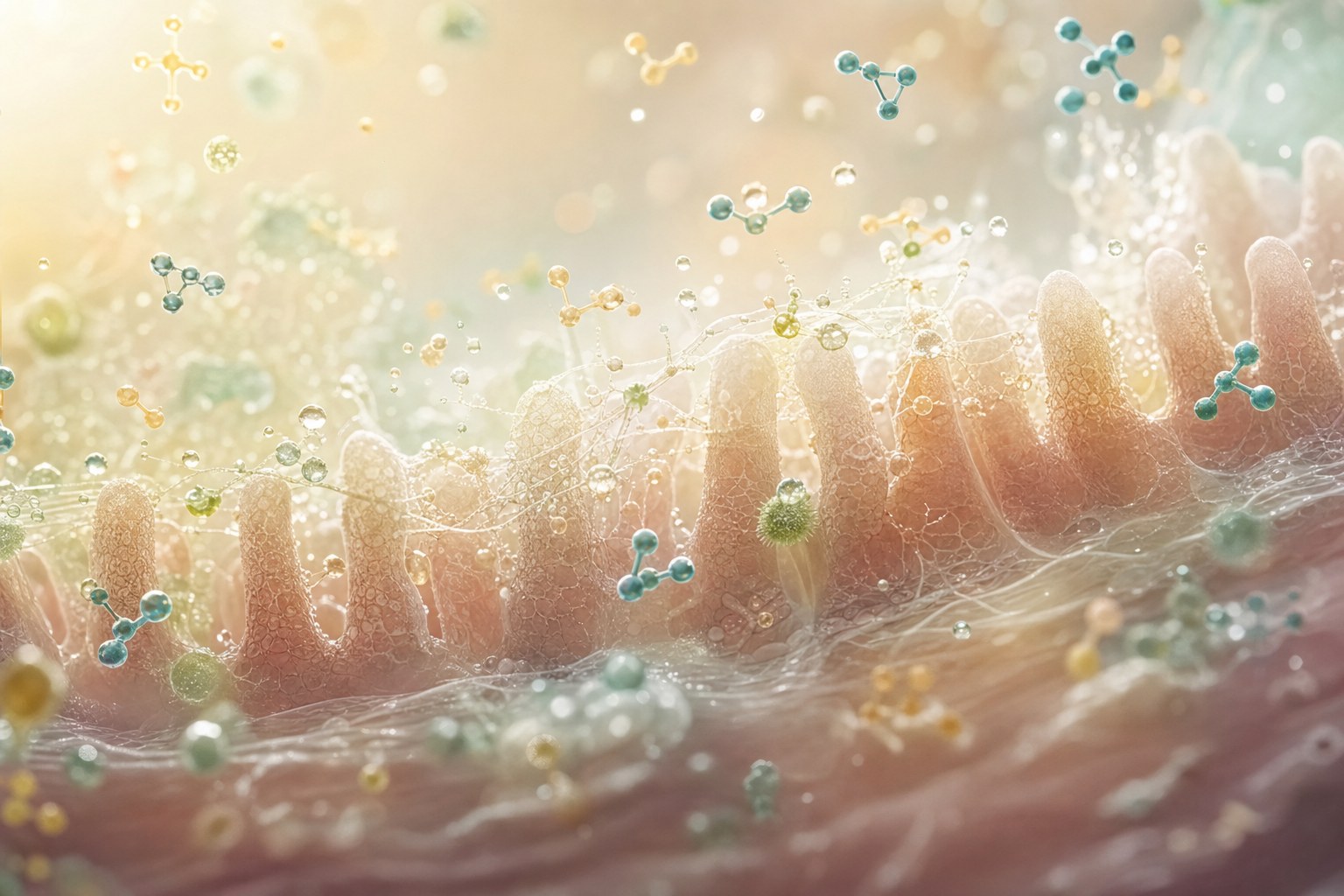
The lining of your intestine is only a single layer of cells thick, yet it has to do two opposite jobs at once: absorb the water, nutrients, and minerals you need while keeping out microbes, toxins, and partly digested material. Intestinal permeability is the term for how tightly or loosely that gatekeeping works. The cells are stitched together by protein seals, and above them sits a protective mucus layer, so passage is meant to be selective rather than wide open. When the barrier is balanced, useful molecules move through in a controlled way and the immune system stays calm. When it becomes more permeable than it should, more unwanted material can slip across and stir up the immune response, a pattern researchers often refer to informally as a leaky gut. Dr. Rob considers barrier health in the context of your labs, symptoms, diet, and goals rather than in isolation.
The Science & Mechanism
The intestinal barrier is a single layer of epithelial cells sealed by apical junctional complexes, most importantly tight junctions built from proteins such as occludin, the claudin family, and junctional adhesion molecules, anchored to the actin cytoskeleton by zonula occludens (ZO-1, ZO-2, ZO-3) scaffolding proteins. Molecules cross by two main routes: the transcellular pathway, through the cells via transporters and channels, and the paracellular pathway, between cells through the gaps that tight junctions regulate. Tight-junction tone is dynamically modulated; the signaling protein zonulin, along with myosin light-chain kinase activation and inflammatory cytokines like TNF-alpha and IFN-gamma, can loosen these seals and widen paracellular flux. Layered above the epithelium are the mucus barrier, secretory IgA, and antimicrobial peptides, while short-chain fatty acids such as butyrate from microbial fermentation help fuel colonocytes and support junction integrity. Research associates increased permeability with translocation of bacterial products such as lipopolysaccharide, activation of gut-associated lymphoid tissue, and low-grade inflammation. Studies explore permeability as both a consequence and a potential contributor to dysbiosis and systemic immune signaling, though the direction of causation is still being defined.
Potential Benefits
- May support a balanced, selective gut barrier that absorbs nutrients while limiting unwanted passage
- Studied for its role in the tight junctions and mucus layer that maintain barrier integrity
- Associated in research with immune tone through crosstalk with gut-associated lymphoid tissue
- Explored for its links to digestion, comfort, and how the gut responds to foods and microbes
- Studied for its relationship to short-chain fatty acids like butyrate that nourish the gut lining
- May support a fuller understanding of systemic inflammation when assessed alongside labs and history
Who It May Be Best Suited For
- Adults with digestive concerns such as bloating, discomfort, or food sensitivities worth exploring
- Those interested in how diet, fiber, and lifestyle influence their gut-barrier health
- People focused on immune and inflammatory patterns who want a fuller picture of gut function
- Anyone seeking a physician-guided look at barrier integrity as part of overall gut and longevity health
Important Considerations
This overview of intestinal permeability is educational, research-informed content, and any testing or supportive strategy is decided one-on-one with Dr. Rob based on your labs, symptoms, health history, and goals. Because barrier science is still evolving and testing methods vary in how well they are validated, interpretation and any protocol are determined during a personal consultation rather than a one-size-fits-all approach. These statements have not been evaluated by the FDA, this content is not intended to diagnose, treat, cure, or prevent any disease, and individual results vary.