Overview
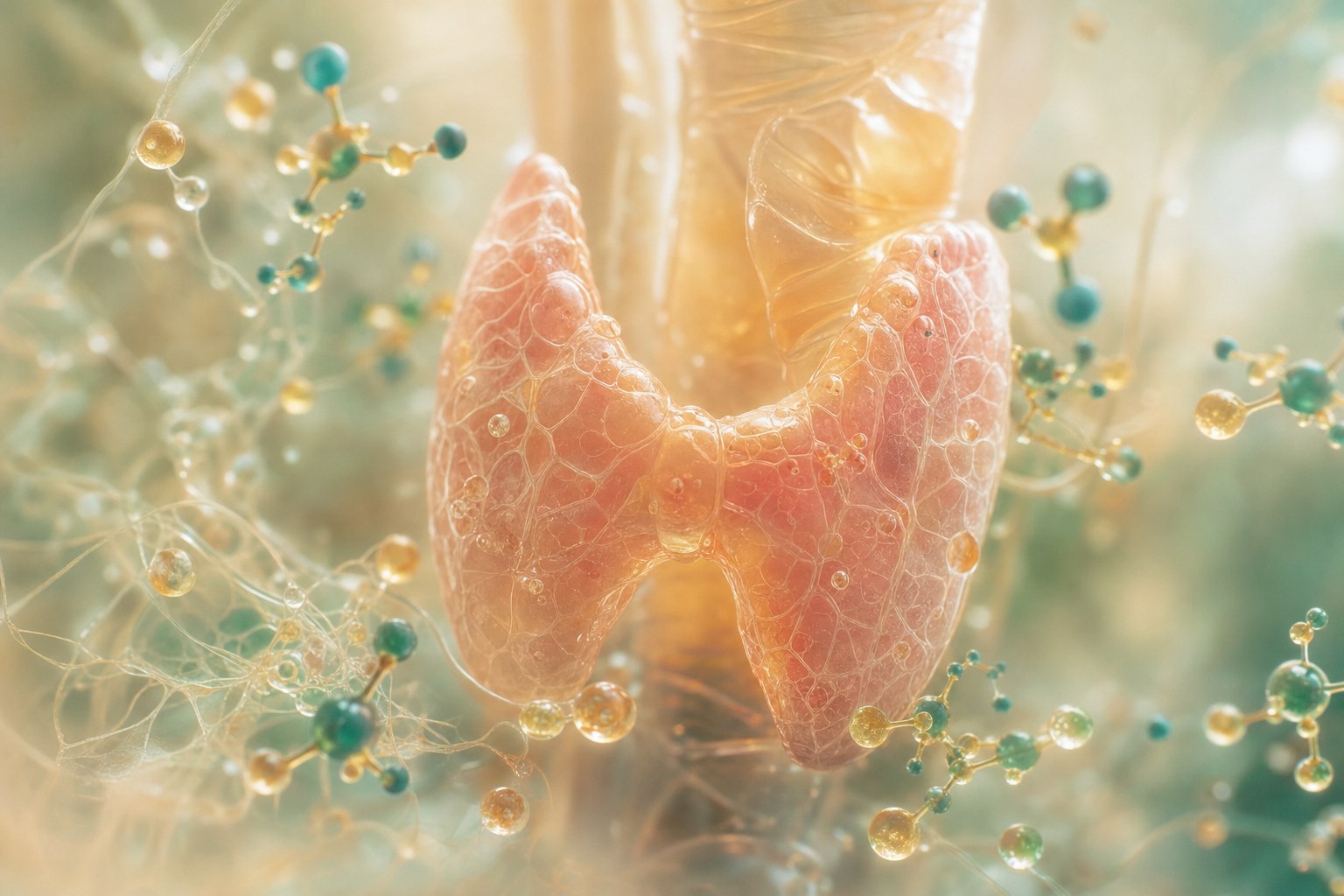
Hashimoto's thyroiditis is a long-term autoimmune condition in which the immune system slowly directs itself against the thyroid, a small butterfly-shaped gland in the neck that helps set the body's metabolic pace. As thyroid tissue is affected over months to years, the gland can produce less hormone, a state known as hypothyroidism, though the process can be silent early on. It is one of the most common autoimmune conditions and is seen far more often in women, frequently emerging in mid-adulthood but possible at any age. People may notice fatigue, cold sensitivity, weight changes, dry skin, hair thinning, brain fog or mood shifts, while others feel well and are identified only through labs. Viewed through a full-body optimization lens, the thyroid is one node in a larger network linking immune activity, inflammation, gut health, stress hormones and metabolism, which is why Dr. Rob considers the whole picture rather than a single number.
The Underlying Biology
Hashimoto's is a T-cell mediated autoimmune process in which loss of immune tolerance leads to lymphocytic infiltration of the thyroid and progressive follicular damage. Autoreactive cytotoxic T cells and cytokines such as interferon-gamma drive tissue injury, while B cells generate autoantibodies against thyroid peroxidase (TPO) and thyroglobulin (Tg); anti-TPO antibodies are the most sensitive serologic marker and are detectable in the majority of cases. TPO normally organifies iodide onto thyroglobulin to build thyroxine (T4) and triiodothyronine (T3), so immune destruction of these components gradually reduces hormone output. As the gland falters, feedback through the hypothalamic-pituitary-thyroid axis raises thyroid-stimulating hormone (TSH) to compensate, often before free T4 and free T3 fall, producing a subclinical phase. Research describes genetic susceptibility (HLA and immune-regulatory genes), female predominance influenced by sex hormones, and environmental contributors including iodine intake, selenium status, vitamin D, stress, infections and the gut microbiome. Because thyroid hormone regulates metabolism system-wide, downstream effects on lipids, energy metabolism, mood and cardiovascular markers are studied, and overlap with other autoimmune conditions is well documented.
What the Research Explores
- Explores how immune tolerance is lost and why the thyroid becomes an autoimmune target
- Investigates whether markers such as TPO and Tg antibodies, TSH and free thyroid hormones clarify disease stage
- Examines the roles of selenium, vitamin D, iodine status and other nutrients studied in autoimmune thyroid research
- Studies how gut health, chronic inflammation and stress-hormone patterns may intersect with thyroid autoimmunity
- Explores the relationship between thyroid function and downstream metabolic, lipid, mood and cardiovascular markers
- Investigates whole-body optimization strategies aimed at supporting resilience alongside physician-directed thyroid care
Who May Find This Relevant
- People with a diagnosis or family history of autoimmune thyroid disease exploring the biology
- Those with fatigue, cold sensitivity, weight or mood changes and abnormal thyroid or antibody labs
- Individuals with other autoimmune conditions seeking to understand thyroid-immune connections
- Anyone building a physician-guided, labs-informed thyroid and longevity plan with Dr. Rob
Important Considerations
This page is educational only and is not a diagnosis, medical advice, or a treatment plan. Hashimoto's thyroiditis is a medical condition that must be evaluated and managed with your own physician, and any optimization support is decided one-on-one with Dr. Rob based on your labs, history and goals. Individual situations vary; these statements have not been evaluated by the FDA and are not intended to diagnose, treat, cure or prevent any disease.