
Overview
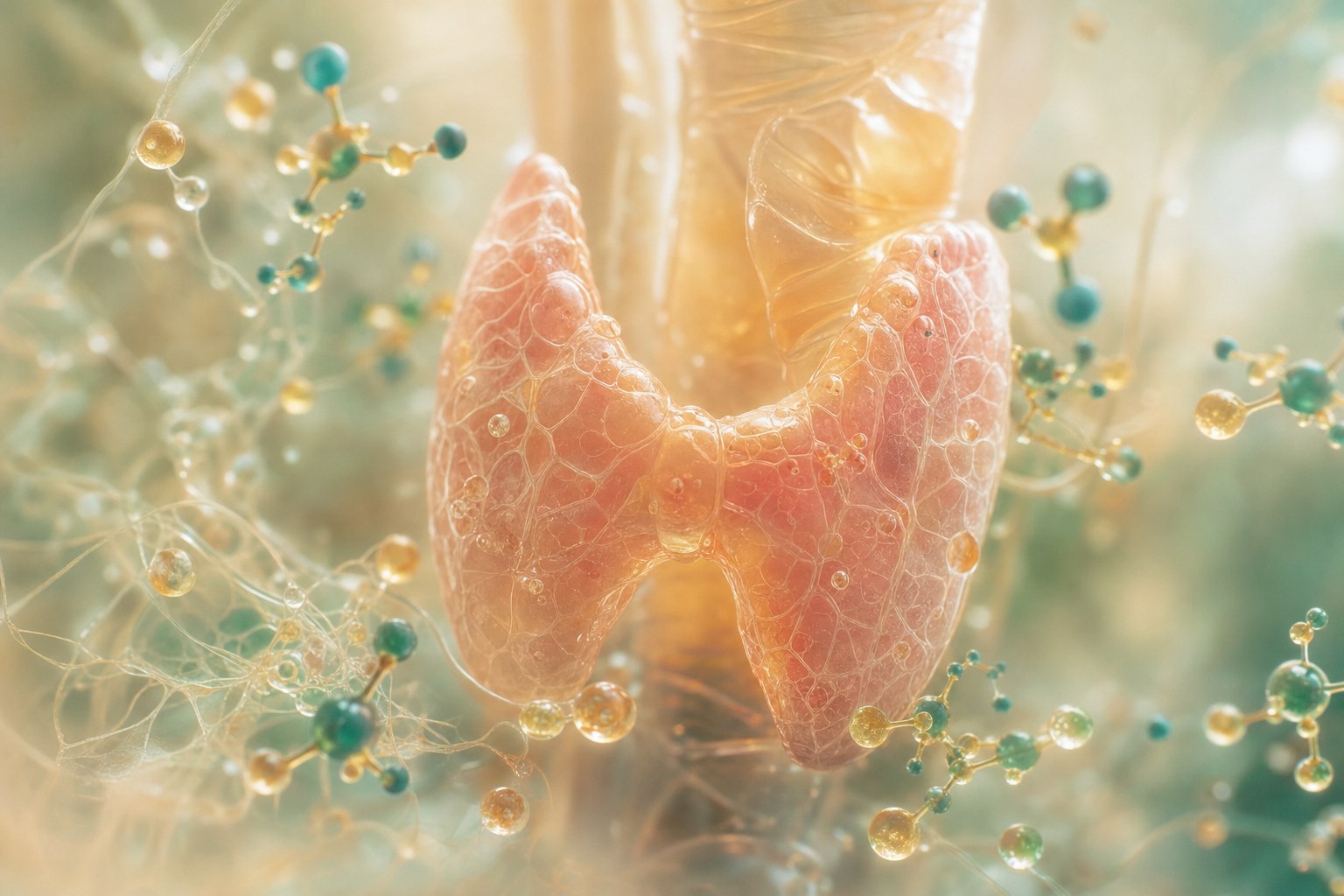
Graves' disease is the most common cause of an overactive thyroid, or hyperthyroidism. Instead of protecting the body, the immune system makes antibodies that latch onto the thyroid's TSH receptor and switch it on continuously, so the gland pours out more thyroid hormone than the body needs. In everyday terms, it is as if the thermostat that sets the body's pace has been jammed toward high, which people may notice as a racing heart, unintended weight loss, heat intolerance, tremor, anxiety, restlessness or trouble sleeping. It affects women more often than men and frequently appears between roughly the twenties and fifties, though it can arise at any age, and some people also develop eye changes known as thyroid eye disease. Because thyroid hormone touches nearly every organ, energy pathway and stress system, Graves' is a condition where a full-body, physiology-aware perspective is especially useful.
The Underlying Biology
Graves' disease centers on TSH-receptor antibodies (TRAb), specifically stimulating immunoglobulins that mimic thyroid-stimulating hormone. These autoantibodies bind the TSH receptor on thyroid follicular cells and activate its G-protein and cyclic-AMP signaling, driving continuous synthesis and release of thyroxine (T4) and triiodothyronine (T3) independent of normal pituitary feedback. The resulting rise in free T4 and free T3 suppresses pituitary TSH to very low or undetectable levels, the classic biochemical signature. Loss of immune tolerance involves both genetic susceptibility, including HLA and immune-regulatory gene variants, and environmental triggers such as stress, smoking, infection and iodine exposure, with T-helper and B-cell activity sustaining antibody production. Excess thyroid hormone accelerates basal metabolic rate, increases beta-adrenergic sensitivity and heat production, and raises cardiac output, which links the condition tightly to catecholamine and stress physiology. The same TSH-receptor and related antigens expressed in orbital fibroblasts help explain thyroid eye disease. Commonly assessed markers include TSH, free T4, free T3, TRAb or thyroid-stimulating immunoglobulins, and sometimes TPO antibodies, interpreted together to characterize the pattern.
What the Research Explores
- Explores how TSH-receptor antibodies drive continuous thyroid stimulation and hormone overproduction
- Investigates the way excess thyroid hormone reshapes metabolic rate, heart rate and body weight
- Examines the overlap between thyroid overactivity and adrenaline-driven stress physiology
- Considers how commonly assessed markers such as TSH, free T4, free T3 and TRAb characterize the pattern
- Reviews the role of genetics and environmental triggers like smoking, stress and iodine exposure
- Explores whole-body optimization strategies that aim to support energy, sleep and resilience alongside physician-directed care
Who May Find This Relevant
- People exploring an autoimmune cause behind an overactive thyroid or suppressed TSH
- Those with symptoms like racing heart, weight loss, tremor or heat intolerance seeking context
- Individuals with a personal or family history of autoimmune thyroid conditions
- Anyone building a labs-informed, physician-guided understanding of thyroid and metabolic health with Dr. Rob
Important Considerations
This information is educational only and is not intended to diagnose, treat, cure or prevent any disease. Graves' disease is a medical condition that must be evaluated and managed with your own physician, and any optimization support is decided one-on-one with Dr. Rob based on your labs, personal history and goals. Individual situations vary, and these statements have not been evaluated by the FDA.