How It Works
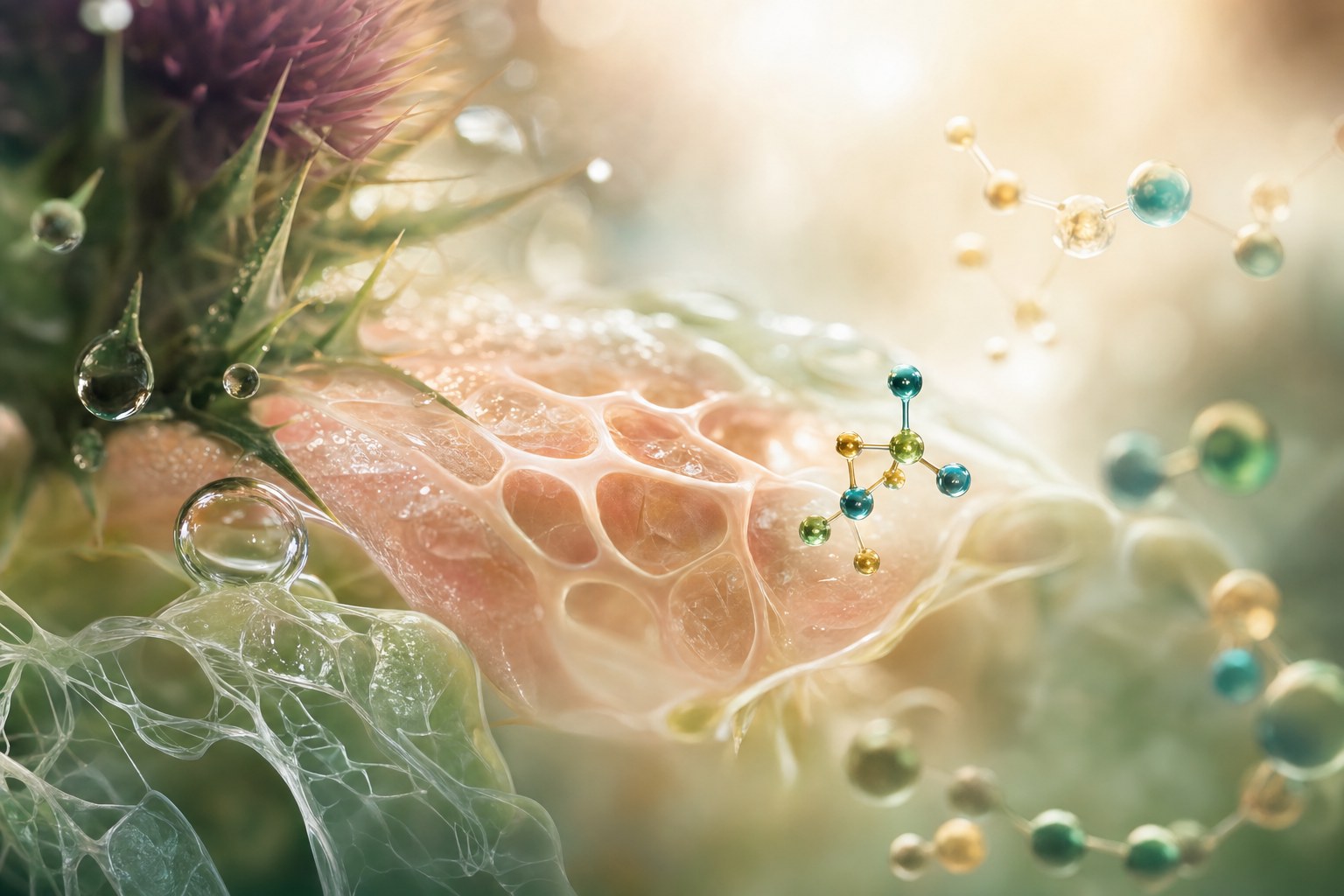
Milk thistle (Silybum marianum) is a spiny purple-flowered plant in the daisy family that has been used in traditional practice for liver and digestive complaints for more than two thousand years. The active material comes from the small seeds, which are rich in a group of plant compounds collectively called silymarin, of which silibinin (also written silybin) is the most studied. In everyday terms, silymarin appears to act like a shield and a scavenger inside liver cells: it helps mop up reactive byproducts of normal metabolism and toxin processing, and it may make cell membranes more resistant to certain insults. Research also describes how it may support the liver's normal ability to renew and maintain its own cells. It is one of the most widely researched botanicals for liver-related wellness.
The Science & Mechanism
Milk thistle's biological activity is attributed to silymarin, a standardized extract of flavonolignans from the seed, dominated by silibinin (silybin A and B) alongside isosilybin, silychristin, and silydianin. The best-characterized action is antioxidant: silymarin scavenges free radicals generated during hepatic metabolism of substances such as alcohol and other xenobiotics, and it inhibits lipid peroxidation, the chain reaction that damages fatty membranes. It is described as supporting the liver's own defenses by helping maintain intracellular glutathione and by increasing the activity of antioxidant enzymes such as superoxide dismutase and glutathione peroxidase. Silibinin is also reported to stabilize hepatocyte cell membranes, which may reduce the uptake of certain toxins, and to modulate inflammatory signaling, notably by dampening the NF-kB pathway and downstream cytokines such as TNF-alpha and interleukin-6. Additional research explores effects on protein synthesis and tissue remodeling. A recognized challenge is that silibinin has low oral bioavailability and is rapidly conjugated and cleared, which is why formulation and standardization to silymarin content are emphasized in the literature.
Potential Benefits
- May support the liver's antioxidant defenses through its silymarin and silibinin content
- Studied for its role in scavenging free radicals and limiting lipid peroxidation
- May help the body maintain healthy intracellular glutathione levels in liver cells
- Associated with hepatocyte membrane stabilization that may resist certain toxin uptake
- Studied for its role in modulating inflammatory signaling via the NF-kB pathway
- May support the liver's normal capacity to renew and maintain its own cells
Who It May Be Best Suited For
- Individuals prioritizing liver and metabolic wellness under physician guidance
- Those building an antioxidant-focused strategy around botanical support
- People interested in a well-researched adaptogenic botanical with a long traditional record
- Anyone shaping a labs-informed supplement plan one-on-one with Dr. Rob
Important Considerations
Milk thistle is generally studied at standardized silymarin concentrations, and suitability, form, and any use are decided one-on-one with Dr. Rob based on your labs, history, medications, and goals, since some botanicals can interact with drug metabolism. This content is educational only and has not been evaluated by the FDA; it is not intended to diagnose, treat, cure, or prevent any disease, and individual results vary.