Overview
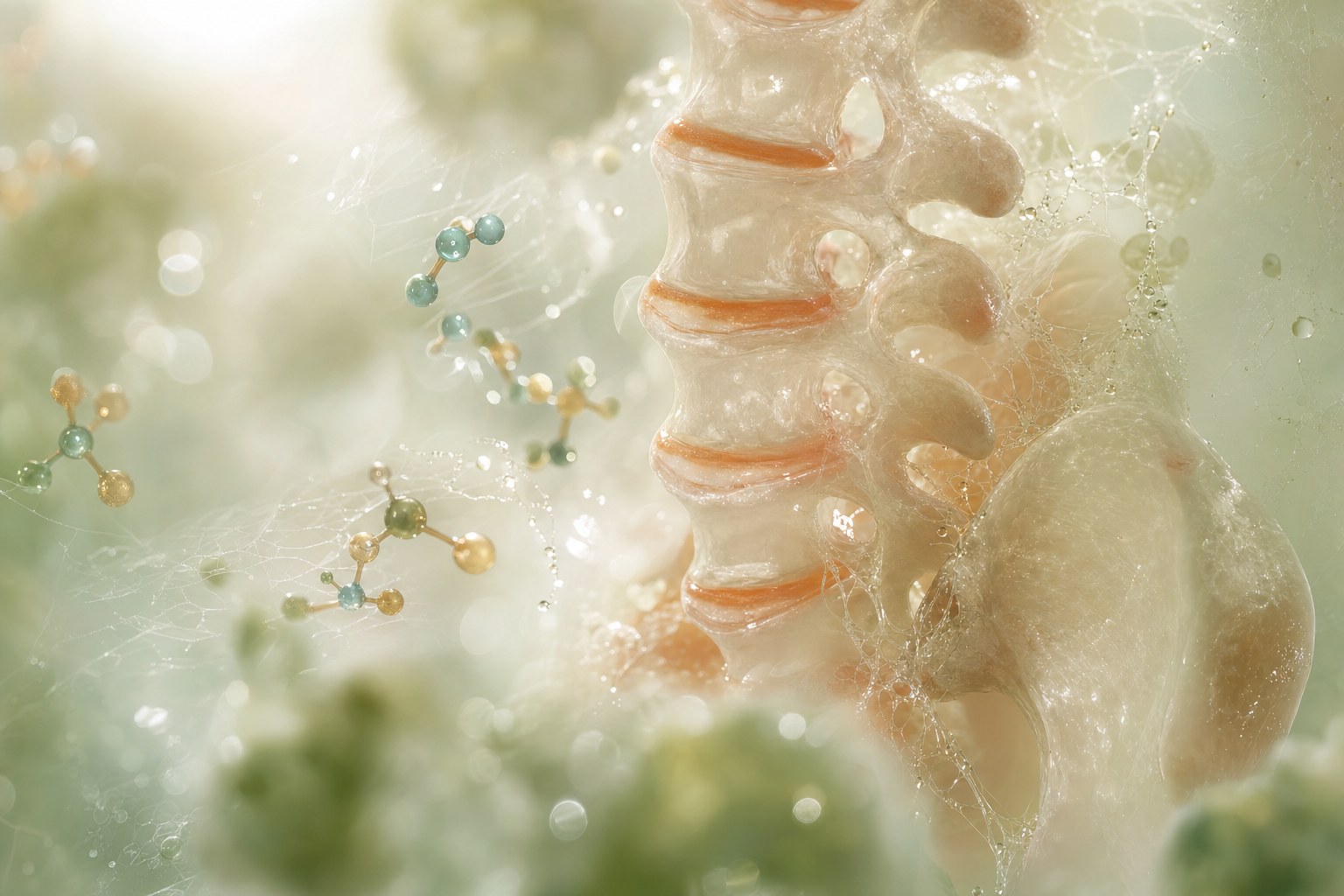
Osteoarthritis (OA) is the most common form of arthritis, in which the cartilage that cushions the ends of bones gradually breaks down while the underlying bone, joint lining, and nearby ligaments and muscles also change. It most often affects the knees, hips, hands, and spine, and tends to produce pain that worsens with activity, stiffness after rest, reduced range of motion, and sometimes grinding or swelling. OA becomes more common with age and affects people worldwide, with risk shaped by prior joint injury, mechanical load, body composition, genetics, and sex, and it is a leading contributor to chronic pain and mobility loss. Modern research reframes it not as passive wear but as an active, whole-joint process. Viewed through a full-body optimization lens, that shift is why OA is studied alongside metabolic health, systemic inflammation, muscle strength, and movement quality rather than as an isolated mechanical problem.
The Underlying Biology
Osteoarthritis is now understood as a disease of the entire joint as an organ, not cartilage alone. Articular cartilage is maintained by chondrocytes that balance synthesis and breakdown of the collagen and proteoglycan matrix; in OA this balance shifts toward degradation, driven by matrix-degrading enzymes such as matrix metalloproteinases (MMPs) and aggrecanases (ADAMTS). Mechanical overload and injury generate signals that activate chondrocytes and synovial cells to release pro-inflammatory mediators, including interleukin-1-beta, tumor necrosis factor-alpha, and interleukin-6, producing a chronic low-grade inflammation sometimes described as inflammaging. Subchondral bone remodels and forms osteophytes, the synovium can become inflamed (synovitis), and the joint's mechanical environment progressively deteriorates. Research also explores metabolic contributors: adipose tissue secretes adipokines such as leptin, and systemic factors linked to obesity, insulin resistance, and dyslipidemia are associated with OA even in non-weight-bearing joints. Commonly assessed markers include imaging of joint-space narrowing and osteophytes, alongside systemic inflammatory markers like CRP. These overlapping mechanical, metabolic, and inflammatory pathways explain why OA is increasingly framed as a whole-person condition connected to body composition, activity, and metabolic health.
What the Research Explores
- Explores the role of matrix-degrading enzymes and cytokines like IL-1-beta and TNF-alpha in cartilage breakdown
- Investigates whether metabolic factors such as body composition, insulin resistance, and adipokines are associated with joint changes
- Examines how muscle strength, joint mechanics, and movement quality relate to load, function, and comfort
- Studies the relationship between systemic low-grade inflammation and progression across weight-bearing and hand joints
- Considers how nutrition, weight management, and physical activity are studied in connection with joint health and mobility
- Investigates how prior injury, alignment, and biomechanics relate to which joints are affected and how they change over time
Who May Find This Relevant
- People exploring joint health through a combined mechanical, metabolic, and inflammatory lens
- Those focused on preserving mobility, strength, and function as part of longevity
- Individuals with a history of joint injury or related metabolic labs seeking added context
- Caregivers and partners supporting someone navigating joint pain and reduced mobility
Important Considerations
This page is educational only and is not intended to diagnose, treat, cure, or prevent osteoarthritis or any disease. Osteoarthritis is a medical condition that must be evaluated and managed with your own physician or orthopedic and rheumatology team, and whether and how any optimization support fits alongside that care is decided one-on-one with Dr. Rob, based on your history, imaging, labs, and goals. These statements have not been evaluated by the FDA, and individual situations and results vary widely.