Overview
Chronic low back pain is pain in the lumbar region that lasts twelve weeks or longer, or recurs repeatedly, and it is among the most common reasons people seek care and lose function worldwide. In many cases no single structural cause fully explains the pain, which is why it is increasingly understood as a condition where tissue, nervous-system, and lifestyle factors interact. It affects people across all ages and activity levels, though risk rises with sedentary patterns, prior injury, deconditioning, and metabolic and mood factors. Left unaddressed, it can quietly erode movement, sleep, mood, and overall vitality. Viewed through a full-body optimization lens, chronic low back pain is studied not as an isolated back problem but as a whole-person pattern connecting the musculoskeletal, inflammatory, metabolic, and nervous systems.
The Underlying Biology
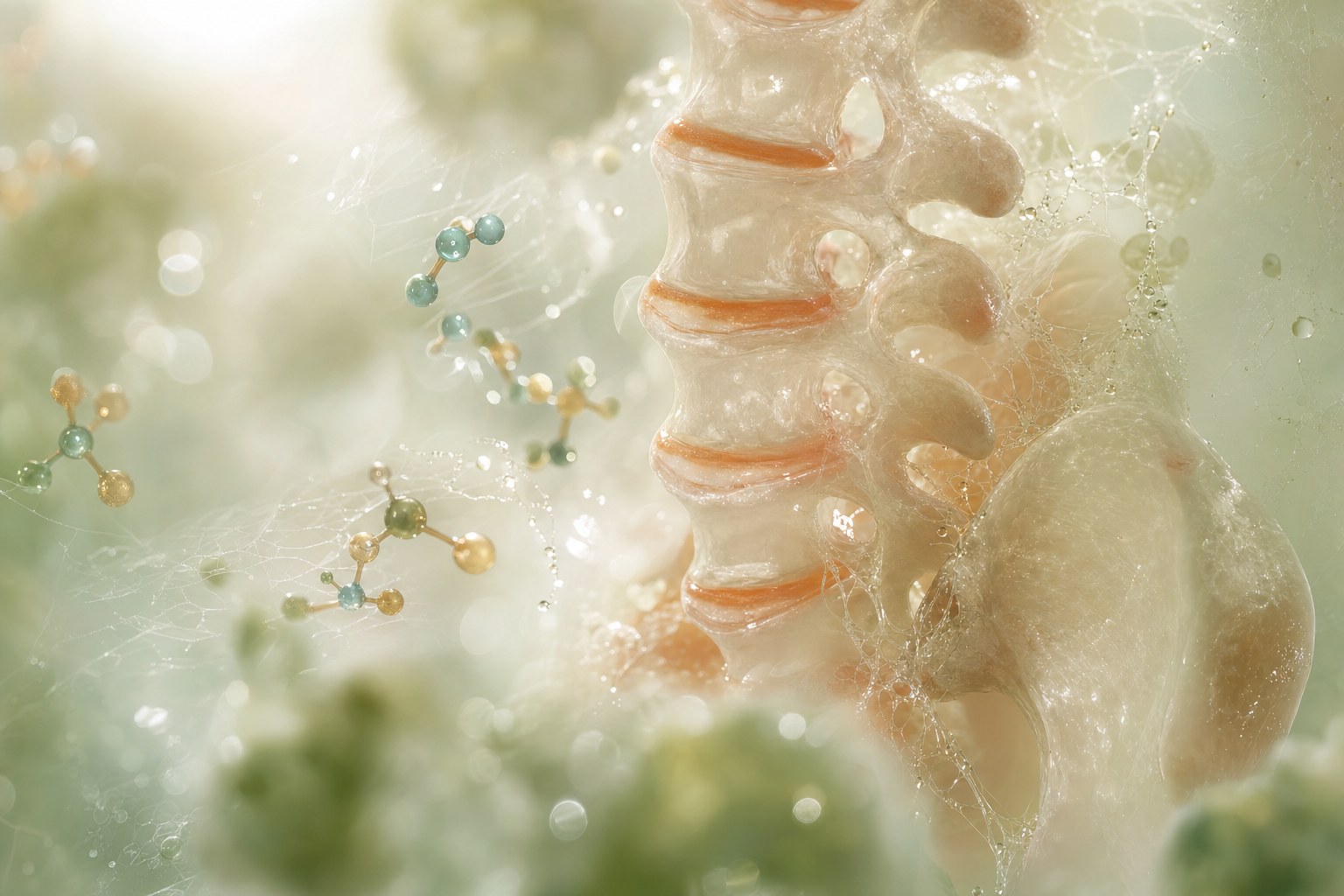
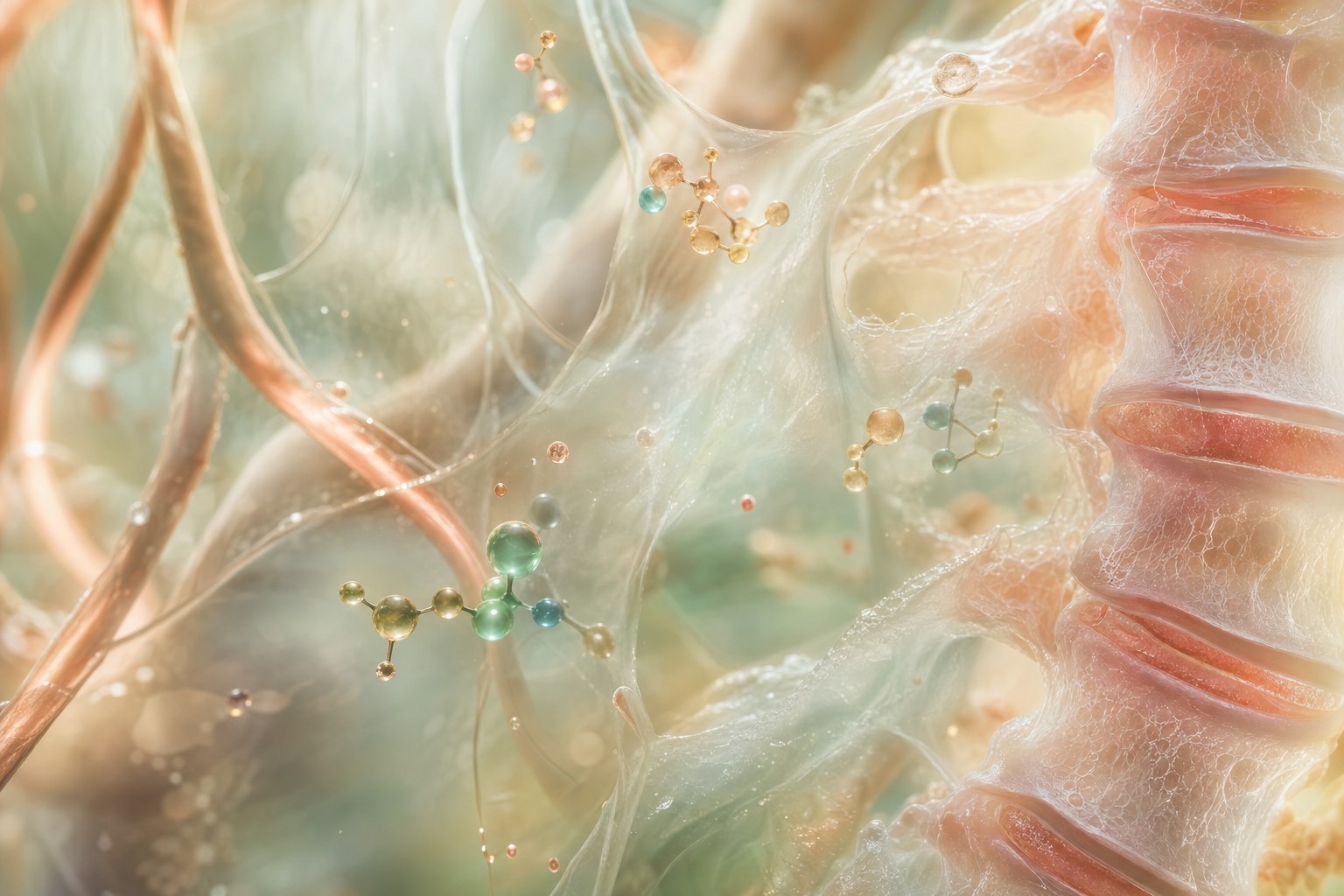
Chronic low back pain is understood as a biopsychosocial process rather than a single mechanical lesion. Contributing tissue sources can include intervertebral discs, facet joints, sacroiliac joints, muscles, and ligaments, and imaging findings often correlate poorly with symptoms. When pain persists, the nervous system frequently undergoes central and peripheral sensitization, in which pain-processing pathways in the dorsal horn and brain become amplified and pain can continue even after tissue healing. Low-grade inflammation is studied as a driver, with pro-inflammatory cytokines such as TNF-alpha, IL-6, and IL-1-beta implicated in disc degeneration, nerve irritation, and sensitization. Deconditioning, altered motor control, and impaired core and gluteal stabilization are associated with recurring strain, while sleep disruption, stress, and elevated cortisol can further lower pain thresholds. Metabolic factors, including obesity, insulin resistance, and vascular changes affecting endplate nutrition, are explored as contributors to disc and spine health. Commonly assessed context includes functional and pain-pattern history, movement and strength testing, inflammatory markers such as CRP, and imaging reserved for specific indications. These overlapping pathways explain why persistent back pain is framed as a whole-body phenomenon.
What the Research Explores
- Explores the role of central and peripheral sensitization in how pain can persist after tissue healing
- Investigates whether inflammatory signaling, including TNF-alpha and IL-6, is associated with disc degeneration and nerve irritation
- Examines how movement quality, core and gluteal stability, and progressive loading relate to function and comfort
- Studies the relationship between sleep, stress, cortisol, and lowered pain thresholds over time
- Considers how body composition, insulin resistance, and vascular health are studied in connection with spine and disc integrity
- Investigates how graded activity, physical conditioning, and nervous-system regulation relate to whole-person resilience
Who May Find This Relevant
- People with persistent low back pain exploring whole-person optimization alongside their physician or spine specialist
- Those investigating how movement, inflammation, sleep, and stress relate to ongoing pain patterns
- Individuals focused on longevity who want to protect long-term mobility and spinal health
- Caregivers and partners seeking a clear, science-forward understanding of chronic back pain
Important Considerations
This page is educational only and is not intended to diagnose, treat, cure, or prevent chronic low back pain or any disease. Persistent back pain should be evaluated and managed with your own physician or spine specialist, particularly to rule out conditions that need specific care; whether and how any optimization support fits alongside that care is decided one-on-one with Dr. Rob, based on your history, labs, and goals. These statements have not been evaluated by the FDA, and individual situations and results vary widely.