How It Works
Taurine is one of the most abundant free amino acids in the human body, yet unlike most amino acids it is not built into proteins. Instead it floats freely inside cells and helps them do their jobs. In everyday terms, it acts like a cellular caretaker: it helps cells hold the right amount of water, keeps calcium signaling steady in the heart and muscle, and helps protect delicate structures like mitochondria and the retina. The body makes some taurine from other sulfur amino acids and also obtains it from foods such as seafood and meat. Because tissue taurine tends to fall with age and certain diets, it has become a common focus in longevity-minded, physician-guided plans, and Dr. Rob considers whether it fits your goals based on your labs and history.
The Science & Mechanism
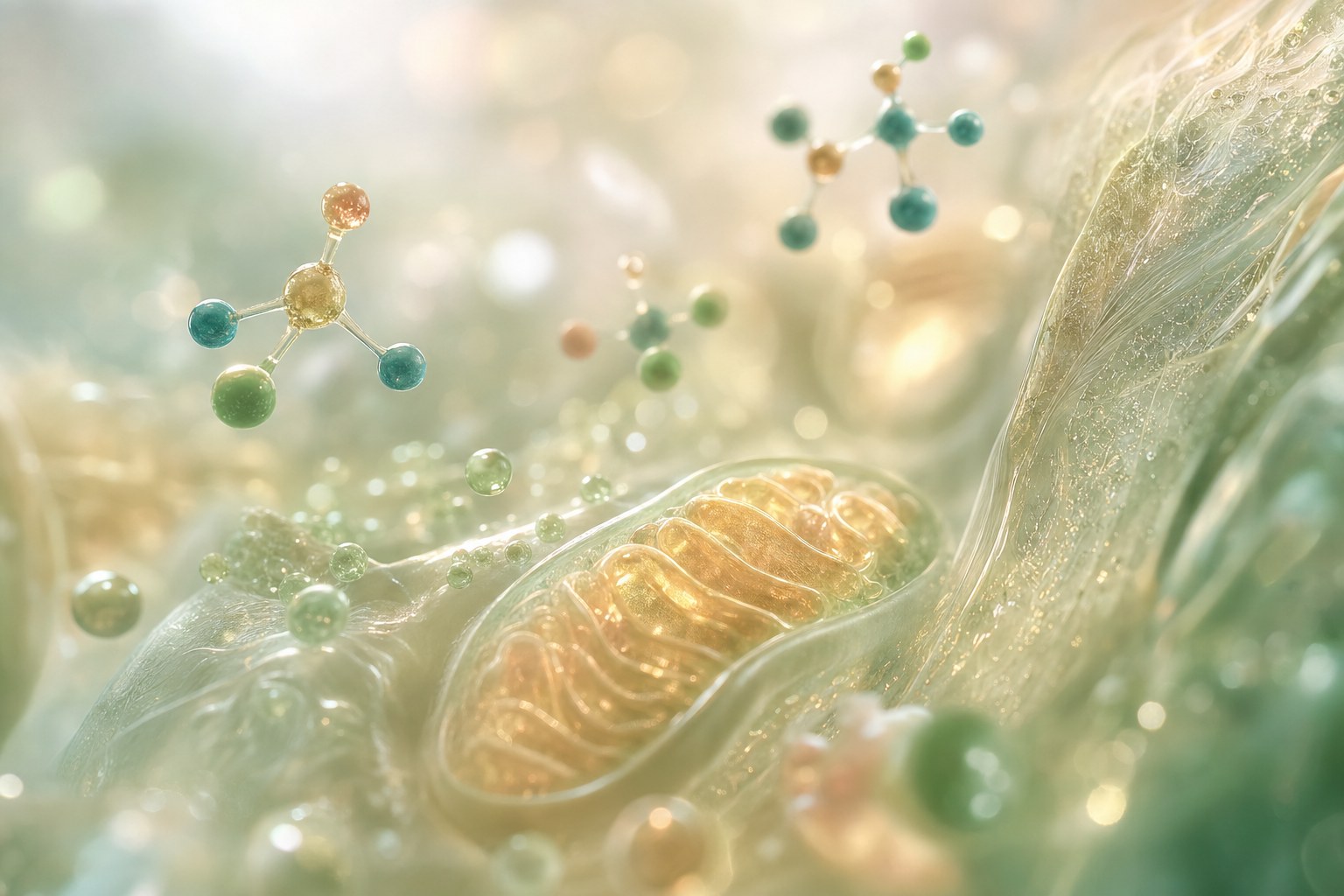
Taurine (2-aminoethanesulfonic acid) is a beta-amino acid distinguished by a sulfonic acid group rather than the carboxyl group of protein-building amino acids, so it is not incorporated into peptide chains and instead functions as a free intracellular molecule. It is synthesized primarily in the liver from cysteine via cysteine dioxygenase and cysteine sulfinic acid decarboxylase, with dietary intake supplying the remainder. One of its best-characterized roles is osmoregulation: taurine is a major organic osmolyte that helps cells maintain volume and fluid balance. In the heart and skeletal muscle it modulates intracellular calcium handling and stabilizes membranes, which is why it is studied in the context of contractile function. Within mitochondria, taurine conjugates specific transfer-RNA molecules (forming taurine-modified tRNA), a modification required for accurate synthesis of proteins in the electron transport chain, linking taurine to energy metabolism and mitochondrial quality. In the liver, taurine conjugates bile acids to form taurine-bile salts that aid fat digestion. It also serves as a modulator of GABA-A and glycine receptors, contributing to neuronal signaling, and it can buffer certain reactive oxidant species. Research further associates taurine status with metabolic, immune, and vascular physiology, and studies have observed circulating and tissue taurine declining with age.
Potential Benefits
- May support healthy heart-muscle function through its role in calcium handling
- Studied for its role in mitochondrial energy metabolism and cellular resilience
- May support normal cellular hydration and fluid balance as an osmolyte
- Research explores its association with healthy aging and metabolic function
- Studied for its role in bile-acid conjugation and fat digestion
- May support antioxidant defenses and steady nervous-system signaling
Who It May Be Best Suited For
- Adults interested in longevity- and healthy-aging-focused protocols
- Active individuals prioritizing cardiovascular and muscle support
- Those exploring mitochondrial and metabolic optimization alongside labs
- Individuals whose diet or history suggests attention to taurine status
Important Considerations
This content is educational only and is not intended to diagnose, treat, cure, or prevent any disease; these statements have not been evaluated by the FDA. Much of the longevity research on taurine to date comes from animal and observational studies, so its role in humans continues to be explored. Whether taurine fits your plan, and in what form and amount, is decided one-on-one with Dr. Rob based on your labs, health history, and goals, and individual results vary.