
How It Works
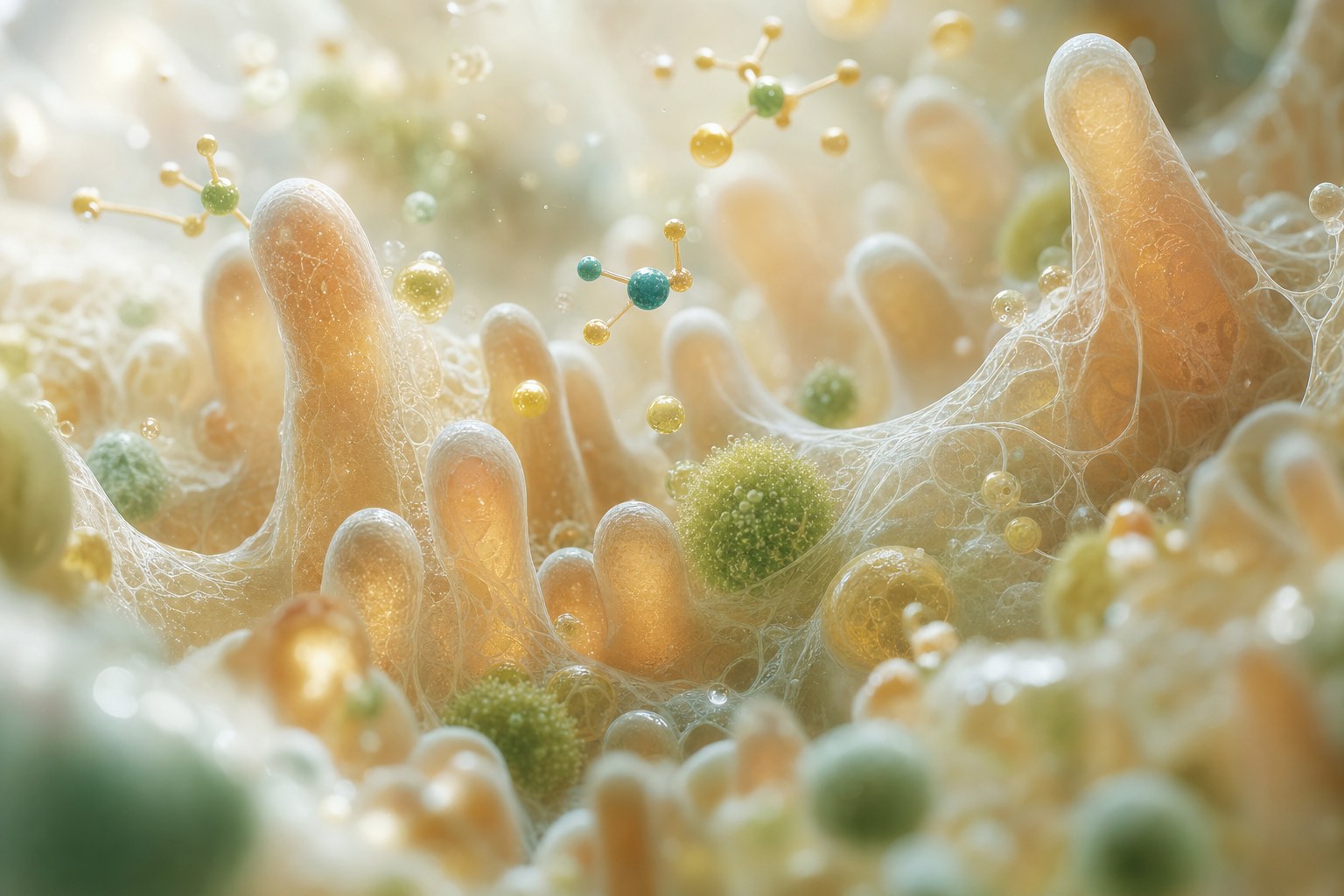
Most of the body's gut bacteria live in the large intestine, while the small intestine, where much of digestion and nutrient absorption happens, is kept comparatively sparse. SIBO is the term for when bacteria build up or migrate into the small intestine in numbers that are higher than usual, or when the types of bacteria there shift. In everyday terms, it is like a crowd gathering in a room that is meant to stay mostly clear, so the normal work of that room gets disrupted. As these bacteria ferment food earlier than they should, they can produce gas and byproducts that are associated with bloating, discomfort, and changes in digestion. Because the small intestine relies on steady movement to stay clean, researchers study SIBO in connection with gut motility, digestive chemistry, and the barriers that normally keep bacteria in balance.
The Science & Mechanism
The small intestine is normally kept low in bacteria by several overlapping defenses: gastric acid, bile, pancreatic enzymes, an intact ileocecal valve, secretory immunity, and the migrating motor complex, a wave of muscular activity between meals that sweeps residual contents downstream. Research describes SIBO as a breakdown in these mechanisms, allowing colonic-type bacteria to accumulate or ascend into the small bowel. Once present, these microbes ferment carbohydrates prematurely, generating hydrogen and, via hydrogen-consuming archaea such as Methanobrevibacter smithii, methane; a related pattern involves hydrogen sulfide. These gases are associated with the bloating, distension, and altered transit seen in studies, with methane linked more to constipation and hydrogen to looser stools. Bacterial deconjugation of bile acids and competition for nutrients are studied in relation to fat and fat-soluble vitamin malabsorption and low vitamin B12, while bacterial synthesis can raise folate. Research also explores damage to the brush border and a low-grade inflammatory response affecting the intestinal barrier. Impaired motility, often following gastroenteritis through autoimmunity against vinculin, along with structural and anatomical factors, is central to how investigators explain recurrence.
Potential Benefits
- May support a clearer explanation for persistent bloating, gas, and abdominal distension when assessed alongside symptoms and testing
- Studied for its role in understanding altered bowel habits, including patterns of constipation or looser stools
- Research explores its association with nutrient absorption, including fat, vitamin B12, and fat-soluble vitamins
- Investigated for its connection to gut motility and the migrating motor complex that keeps the small intestine clear
- Associated in research with overlapping conditions such as IBS, giving context to otherwise unexplained digestive symptoms
- May support a more targeted, physician-guided approach to gut health when the small intestine is considered alongside the wider microbiome
Who It May Be Best Suited For
- Individuals with persistent bloating, gas, or abdominal distension that has not been fully explained
- Those with IBS-type symptoms or altered bowel habits seeking a closer look at the small intestine
- People exploring digestive changes after gastroenteritis, travel, or abdominal surgery
- Anyone seeking a physician-guided evaluation of gut function as part of broader wellness and longevity goals
Important Considerations
This information is educational only and is not intended to diagnose, treat, cure, or prevent any disease. Whether and how SIBO is evaluated and addressed is decided one-on-one with Dr. Rob, based on your labs, personal history, and goals, since gut function is highly individual and SIBO frequently overlaps with other conditions. These statements have not been evaluated by the FDA, and individual results vary.