Overview
Parkinson's disease is a long-term neurodegenerative condition in which specific brain cells that produce dopamine, a chemical messenger central to smooth movement, are lost over many years. As dopamine signaling declines in a region called the substantia nigra, people may notice slowed movement, muscle stiffness, a resting tremor and changes in balance, though the condition often begins quietly with non-motor signs such as reduced sense of smell, constipation, sleep disturbances or mood changes. It most often appears after age sixty and is more common in men, but younger-onset forms exist, and both genetic and environmental factors are studied as contributors. Because dopamine, energy metabolism and inflammation touch nearly every system, symptoms extend well beyond movement to sleep, digestion, blood pressure, cognition and mood. Viewed through a full-body optimization lens, Parkinson's is understood as one part of a wider network linking the nervous system, mitochondria, the gut and immune activity, which is why Dr. Rob considers the whole person rather than motor symptoms alone.
The Underlying Biology
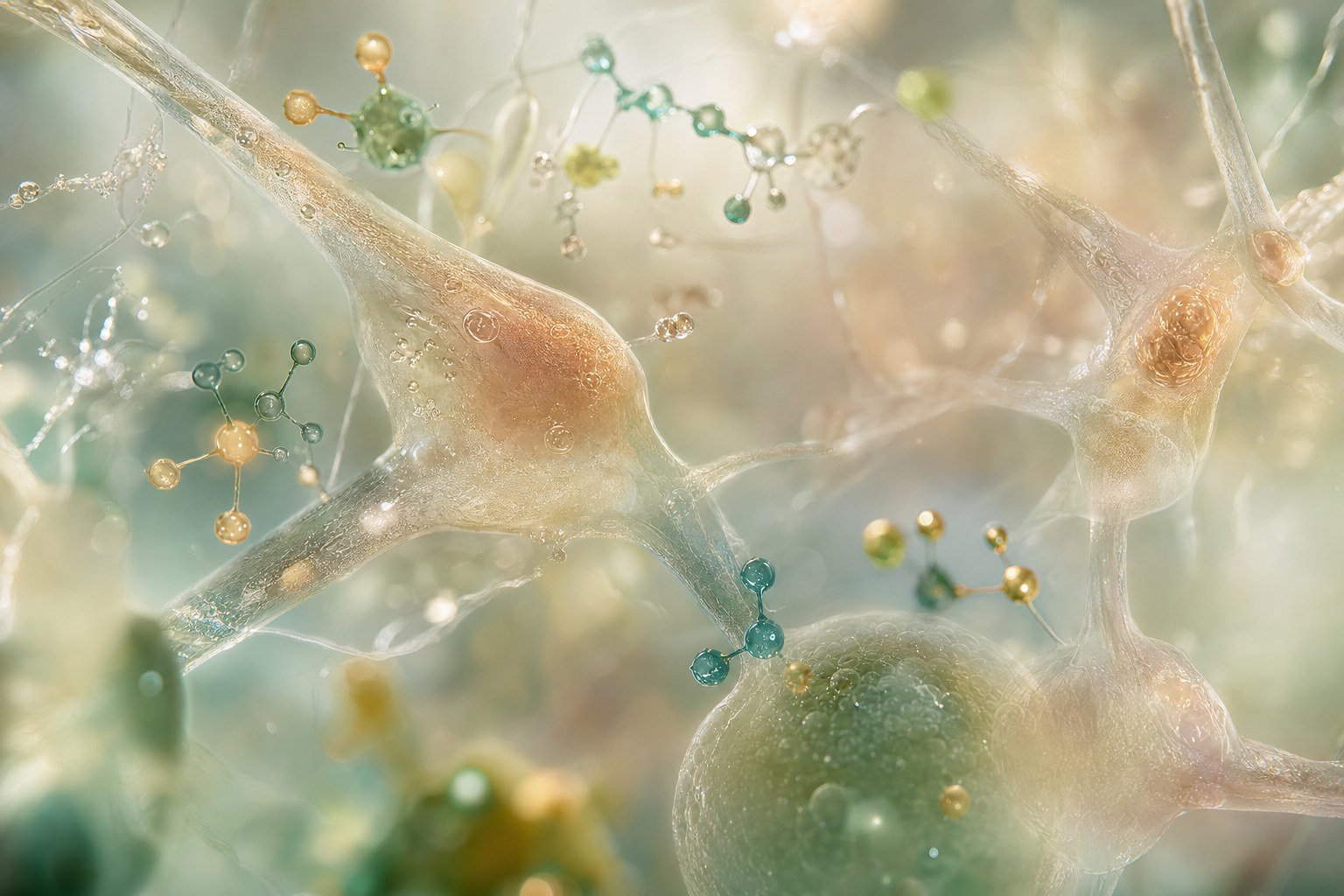
Parkinson's disease is defined pathologically by progressive degeneration of dopaminergic neurons in the substantia nigra pars compacta and by the accumulation of misfolded alpha-synuclein into intracellular aggregates called Lewy bodies. Loss of nigrostriatal dopamine disrupts basal ganglia circuits that regulate movement, producing the classic motor features once a substantial share of these neurons is already lost. Research implicates several intersecting mechanisms: impaired mitochondrial complex I function and oxidative stress, deficits in the ubiquitin-proteasome and autophagy-lysosomal systems that normally clear damaged proteins, chronic neuroinflammation involving activated microglia, and disrupted calcium and iron handling. Genetic studies describe variants in genes such as SNCA, LRRK2, GBA, PRKN and PINK1 that inform mitochondrial quality control and protein clearance, alongside many risk-modifying loci. A prominent hypothesis proposes that alpha-synuclein pathology may begin in the enteric nervous system and olfactory pathways, spreading in a prion-like manner, which has focused attention on the gut microbiome and the vagus nerve. Because dopamine also modulates mood, cognition and autonomic function, downstream effects on sleep, blood pressure, gastrointestinal motility and metabolism are actively studied.
What the Research Explores
- Explores how dopaminergic neuron loss and alpha-synuclein aggregation drive motor and non-motor features
- Investigates whether mitochondrial function, oxidative stress and cellular energy pathways influence disease biology
- Examines the gut-brain axis, the microbiome and vagus-nerve signaling as areas of emerging Parkinson's research
- Studies how chronic neuroinflammation and immune activity may intersect with neurodegeneration over time
- Explores the roles of exercise, sleep, nutrition and metabolic health that research associates with brain resilience
- Investigates whole-body optimization strategies aimed at supporting well-being alongside physician-directed neurological care
Who May Find This Relevant
- People with a diagnosis or family history of Parkinson's seeking to understand the underlying biology
- Those noticing tremor, stiffness, slowed movement or non-motor changes who want an educational overview
- Caregivers and family members wanting clearer context on dopamine, gut and mitochondrial connections
- Anyone building a physician-guided, whole-body wellness and longevity plan with Dr. Rob
Important Considerations
This page is educational only and is not a diagnosis, medical advice, or a treatment plan. Parkinson's disease is a medical condition that must be evaluated and managed with your own physician or neurologist, and any optimization support is decided one-on-one with Dr. Rob based on your history, evaluation and goals. Individual situations vary; these statements have not been evaluated by the FDA and are not intended to diagnose, treat, cure or prevent any disease.